Introduction — The Real Reason Walls Become Damp
In many Kenyan homes, the problem starts long before paint, tiles, or even plaster.
You build a new house. After a few months you begin to notice:
- white powder on walls (efflorescence)
- paint peeling from lower wall sections
- a permanent damp smell
- plaster becoming soft
- dark patches rising from the floor
- mould behind wardrobes
Most people think:
“The paint was fake.”
No.
The real issue is water entering the wall from inside the cement itself.
Cement, mortar and concrete are not waterproof.
They contain microscopic capillaries that allow water to travel upward through the wall. This is called rising damp — one of the most common construction defects in Kenya, especially in ground floor houses and perimeter walls.
The product specifically designed to stop this during construction is:
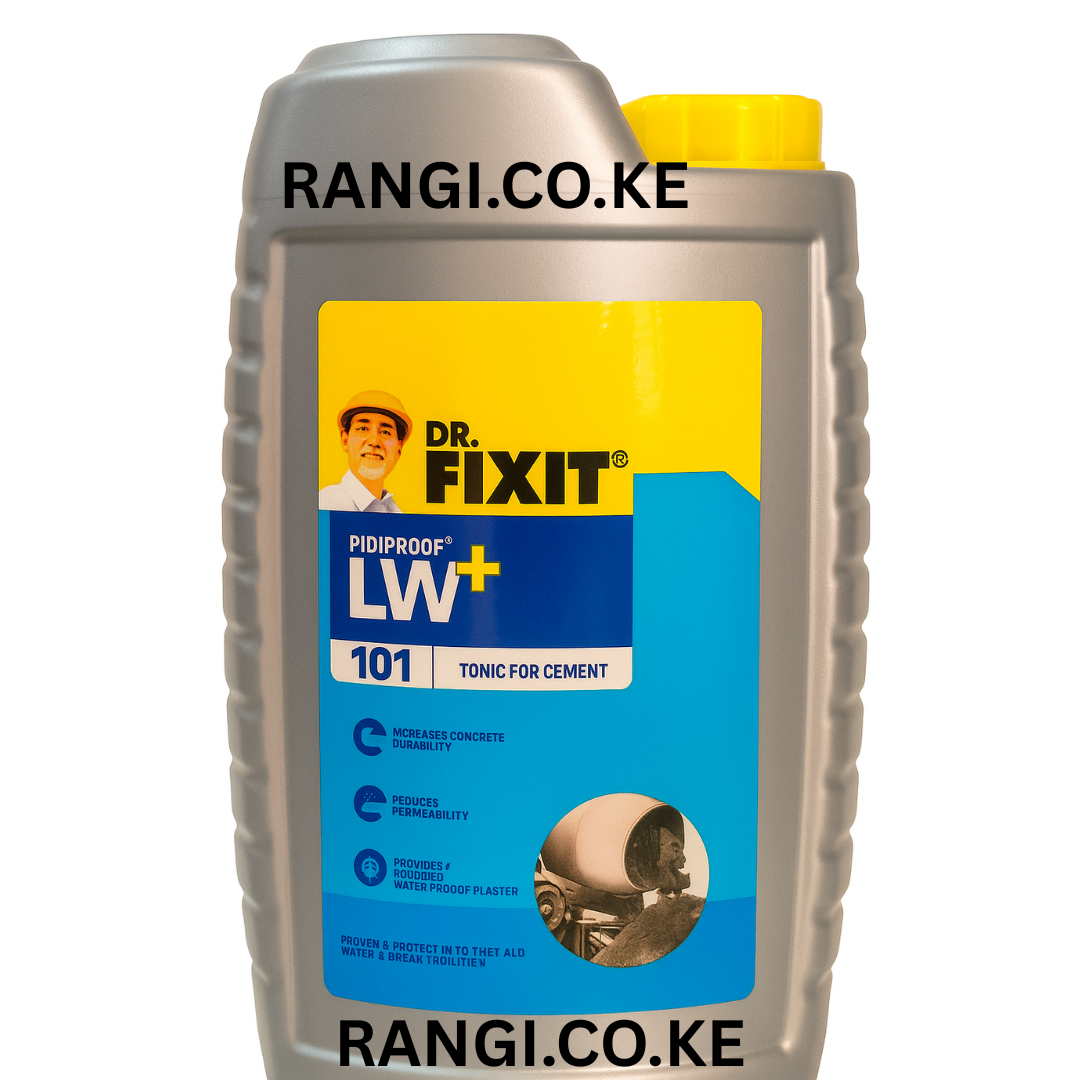
Dr Fixit LW+ 101 (Pidiproof) Tonic for Cement
What is Dr Fixit LW+ 101 (Pidiproof)?
Simple Explanation
Pidiproof is a liquid that you mix with cement mortar during plastering, screeding, or block laying to make the cement water-repellent.
Think of it as:
“Waterproofing built inside the wall.”
Instead of trying to stop leaks after construction, you prevent them from ever forming.
Technical Explanation
Dr Fixit LW+ 101 is an integral liquid waterproofing compound based on specialized surfactants and polymers that reduce the surface tension of water in cement mortar.
When added to mortar:
- it blocks capillary pores
- reduces water absorption
- improves workability
- produces denser plaster
This process is called integral waterproofing.
What Does Pidiproof Actually Do?
1. Prevents Rising Damp
Ground moisture tries to travel upward through masonry walls.
Pidiproof reduces capillary suction, stopping moisture migration.
2. Reduces Efflorescence
The white salts appearing on walls come from water carrying soluble salts through plaster.
When water movement stops, efflorescence stops.
3. Improves Plaster Quality
Mortar becomes:
- smoother
- easier to apply
- less shrinkage
- fewer cracks
Fundis often notice plaster mixed with Pidiproof spreads more easily.
4. Protects Paint
Many paint failures are not paint problems — they are moisture problems.
Water behind paint causes peeling. Pidiproof prevents that.
Where Should Dr Fixit LW+ 101 Be Used?
Foundation masonry
Prevents moisture from soil entering walls.
Ground floor plaster
Most important application.
External plaster
Protects walls exposed to rain.
Bathrooms
Works together with Super Latex 302.
Water tanks (external plaster)
Reduces seepage.
Boundary walls
Prevents dark staining after rains.
Kitchen walls
Stops moisture behind cabinets.
Step-by-Step Application Guide
Step 1 — Prepare Mortar
Typical plaster mix:
1 cement : 4 sand
Step 2 — Mixing Ratio
Add Pidiproof into mixing water first.
Never pour directly into dry cement.
Step 3 — Mix Properly
Stir solution thoroughly before adding cement and sand.
Step 4 — Apply Plaster
Apply normally using trowel.
Step 5 — Cure
Cure plaster for 7 days.
Curing is critical — waterproofing develops during cement hydration.
Correct Mixing Ratios
200 ml Pidiproof per 50 kg cement bag
This is the most important number fundis must remember.
Do not guess.
Too little = ineffective
Too much = weak plaster
Where Pidiproof Is NOT Used
Very important.
Pidiproof is not a coating.
Do NOT:
- brush on walls
- mix with paint
- use as tile adhesive
- use as crack filler
It only works when mixed into cement mortar.
Pidiproof vs Super Latex 302 (Very Important Difference)
| Feature | Pidiproof | Super Latex 302 |
|---|---|---|
| Type | Integral waterproofing | Bonding + waterproofing |
| Used in | Plaster & mortar | Slurry, screed, repairs |
| Main purpose | Stop damp | Stop leakage & improve bonding |
| Stage | During construction | Before tiling / repair |
| Rising damp | Excellent | Moderate |
| Tile bonding | No | Yes |
They are complementary products, not replacements.
Common Site Mistakes
- Fundi forgets dosage
- Mixed directly into dry cement
- No curing
- Used only in bathroom
- Applied as paint
- Used after damp already severe
Coverage Guide
1 litre Pidiproof ≈ 5 bags of cement
Typical bungalow plastering uses 10–20 litres depending on size.
Frequently Asked Questions
Dr Fixit LW+ 101 (Pidiproof) is an integral waterproofing compound added to cement mortar and plaster to reduce water absorption and prevent dampness in walls.
Yes. When mixed into plaster or block laying mortar, Dr Fixit LW+ 101 reduces capillary suction and helps stop moisture rising from the ground.
Dr Fixit LW+ 101 is mainly used during construction while plastering, screeding, or laying blocks. It is preventive waterproofing.
It cannot work on top of paint or old plaster. The damp plaster must be removed and new plaster applied with Dr Fixit LW+ 101 mixed into the mortar.
The recommended dosage is approximately 200 ml of Dr Fixit LW+ 101 per 50 kg bag of cement.
No. It should first be mixed into the gauging water and then used to prepare the mortar.
Yes. It improves water resistance of masonry joints and reduces dampness penetration
Yes. When used in external plaster, it reduces rainwater penetration and helps protect paint from peeling.
It helps reduce moisture in plaster but bathroom floors still require proper under-tile waterproofing using products like bonding and slurry systems.
It can be used in external plaster around tanks, but for internal tank waterproofing, specialized cementitious waterproofing systems are usually required.
No. Dr Fixit LW+ 101 is a cement additive and will not function if mixed with paint.
Yes. Proper curing for at least 5–7 days is required for the waterproofing properties to develop.
No. It supplements DPC but does not replace proper damp proof course installation.
Yes. By reducing moisture inside the wall, it significantly increases paint durability.
Yes. Remove the damaged plaster and replaster using mortar mixed with Dr Fixit LW+ 101.
Yes. It improves mortar workability and reduces shrinkage cracking.
No. Roof slabs require waterproof screed or polymer bonding waterproofing systems rather than integral plaster additives.
Approximately 1 litre treats about 5 bags of cement. Total quantity depends on plastering area.
Yes. It only requires measuring and mixing into water before preparing mortar.
Yes. It helps prevent dark damp patches and staining after rains.
Who Should Use Pidiproof?
- anyone building a new house
- landlords building rentals
- contractors
- masons (mafundi)
- developers
Why Buy From Rangi Paint Store
At Rangi Paint Store you get:
- genuine Dr Fixit products
- guidance on quantities
- waterproofing advice
- product pairing (Pidiproof + Super Latex)
Conclusion
Most waterproofing problems in Kenya are not repair problems — they are prevention problems.
If you add Dr Fixit LW+ 101 (Pidiproof) during plastering, you prevent:
- damp walls
- paint peeling
- mould
- efflorescence
Waterproofing should start at the mortar stage, not after the house is finished.
For correct usage guidance and genuine products, visit Rangi Paint Store and protect your building before problems begin.
For more technical specifications, safety guidelines, and product details about Dr. Fixit LW+ 101 (Pidiproof), you can visit the official Dr Fixit East Africa Website.