1. Introduction — Why So Many Houses in Kenya Leak (Even New Ones)
If you live in Kenya, this story probably sounds familiar.
You build a new house. Everything looks perfect. Tiles are shiny, walls are freshly painted, ceilings are clean. Then 3–6 months later you start noticing:
- brown patches on the ceiling below the bathroom
- paint bubbling and peeling
- musty smell in bedrooms
- tiles popping or grout turning black
- damp walls near the floor (rising damp)
- water dripping during heavy Nairobi rains
The most painful part?
The fundi tells you:
“Ni grout tu imeharibika… tutaongeza cement.”
It works for 2 months.
Then the problem comes back.
Here is the truth
Most houses in Kenya do not leak because of tiles.
They leak because the concrete and plaster were never waterproofed.
Tiles are decorative.
They are not waterproofing.
Concrete and cement are porous materials. They absorb water like a sponge. Once water enters, it travels inside the slab and appears somewhere else — often a completely different room.
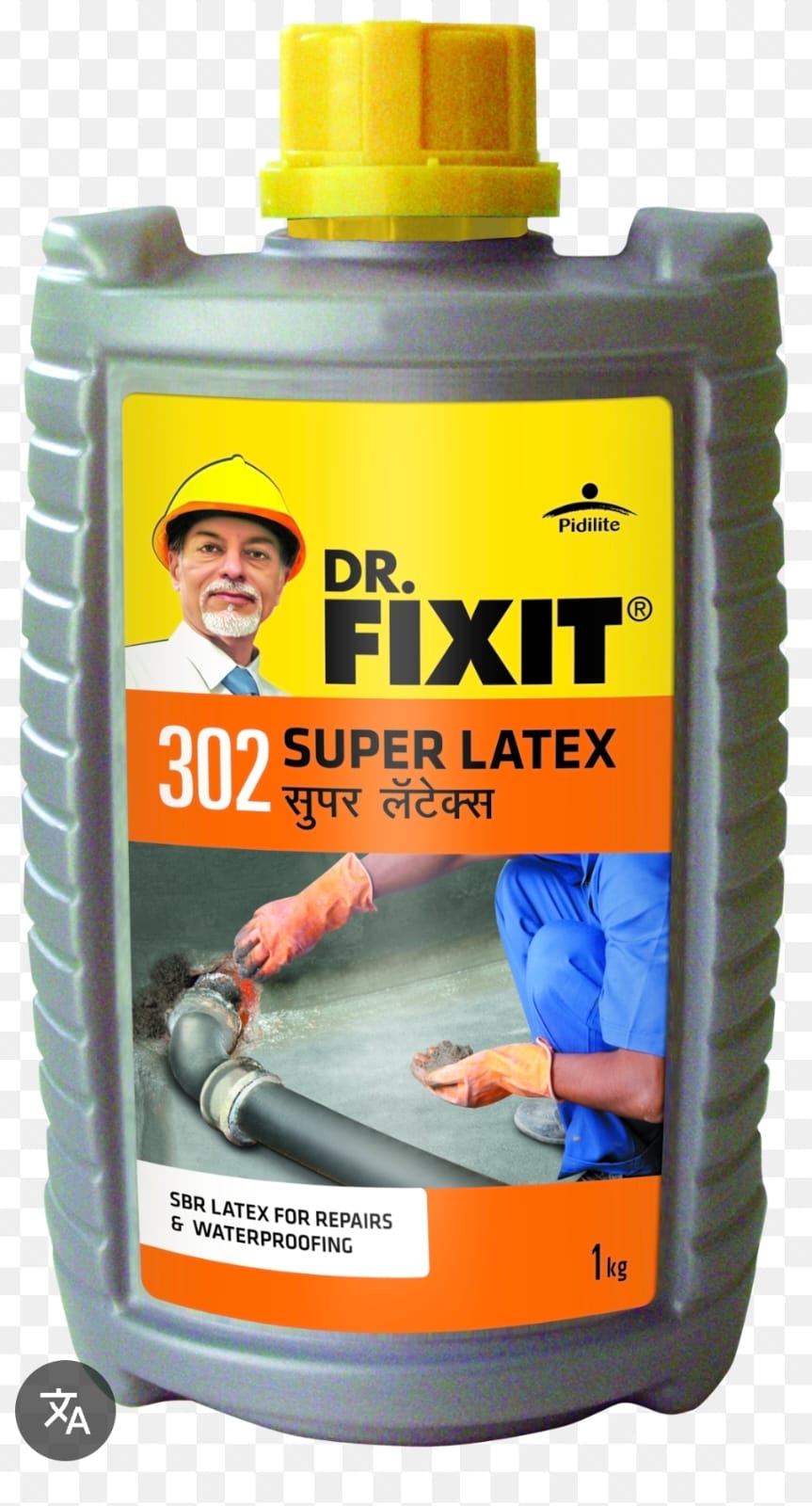
This is where Dr Fixit Super Latex 302 comes in.
It is one of the most important — and most misunderstood — construction chemicals used in waterproofing bathrooms, balconies, slabs, and external walls.
When used correctly, it stops:
- bathroom leaks
- balcony seepage
- damp walls
- plaster cracking
- tiles detaching
And it does this before the problem starts.
2. What is Dr Fixit Super Latex 302?
Simple Explanation
Dr Fixit Super Latex 302 is a liquid additive mixed with cement to make the cement waterproof and stronger.
Think of it as:
“Medicine for cement.”
Instead of cement becoming weak and porous after drying, it becomes dense, flexible, and water-resistant.
Technical Explanation
Dr Fixit Super Latex 302 is an SBR latex polymer (Styrene-Butadiene Rubber) bonding and waterproofing agent.
Normally, when cement cures:
- it forms microscopic capillaries
- water travels through those pores
The latex polymer fills these capillaries and creates a polymer-modified cement matrix. This reduces permeability dramatically and increases adhesion.
That is why it is called both:
- Waterproofing agent
- Bonding agent for cement
What Makes It Different From Other Waterproofing Chemicals?
Many people compare it with bitumen or waterproof paint.
But those are surface coatings.
Super Latex is different because:
It waterproofs the cement itself — not just the surface.
So even if tiles crack or grout fails, the slab still remains protected.
3. What Does It Actually Do? (Very Important)
Here is exactly what happens when you mix Dr Fixit Super Latex 302 with cement.
1. Bonds Old Concrete to New Concrete
If you plaster over an existing slab without a bonding agent, the plaster eventually separates.
Super Latex acts like glue between:
- old slab and new plaster
- repair mortar and existing wall
- screed and concrete floor
2. Reduces Cracks
Normal cement is brittle.
Kenyan weather causes expansion and contraction:
- hot sun during the day
- cold nights
- heavy rain
Latex adds flexibility, reducing shrinkage cracks.
3. Waterproofs Cement
This is the main benefit.
It blocks:
- seepage
- capillary water movement
- dampness
Water cannot easily travel through the cement matrix.
4. Improves Strength
Polymer-modified cement has:
- higher tensile strength
- higher adhesion
- better durability
That is why tiles fixed over latex-modified mortar rarely pop.
5. Stops Dampness and Seepage
This is critical in Kenya where many homes suffer:
- rising damp
- balcony leaks
- tank leakage
- roof slab seepage
Super Latex reduces permeability drastically.
4. Where Can It Be Used?
Bathrooms (Before Tiling)
The most important use.
Every bathroom slab should be waterproofed before tiles.
Balconies
Balconies fail frequently because rainwater sits on tiles.
Without waterproofing → water reaches the slab → leaks into living room.
Roof Slabs & Terraces
Flat roofs and terraces crack due to sun exposure.
Latex-modified screed prevents seepage.
Water Tanks
Internal cement plaster mixed with Super Latex reduces leakage and contamination.
Basement Walls
Helps resist moisture penetration from soil.
Plaster Repairs
Perfect for repairing:
- hollow plaster
- cracks
- damp patches
External Walls (Before Painting)
Prevents paint peeling caused by dampness.
Tile Fixing
Adding Super Latex to tile adhesive improves bonding and prevents tile popping.
5. Step-by-Step Application Guide (Site Manual Style)
Step 1: Surface Preparation
This is where 70% of fundis fail.
Do:
- remove dust
- remove oil/paint
- remove loose concrete
- clean thoroughly
Important:
Surface must be damp — not wet.
Step 2: Crack Repair
Open cracks into a V-shape and fill using cement mortar mixed with Super Latex.
Step 3: Bonding Slurry Coat
Mix:
- cement
- water
- Super Latex
Apply using a brush.
This coat acts as the waterproofing base.
Step 4: Plaster / Screed Application
Apply plaster or screed while slurry is still tacky.
Step 5: Curing
Cure for at least 5–7 days.
This is extremely important.
No curing = waterproofing failure.
Step 6: Tiling
After curing:
- apply tile adhesive
- fix tiles
- grout after 24 hours
6. Mixing Ratios (Very Important)
Waterproofing Slurry
1 cement : latex solution (1 part Super Latex + 2 parts water)
Plaster
1 cement : 3 sand
Replace 15–20% mixing water with Super Latex solution.
Screed
1 cement : 2.5 sand
Add Super Latex solution instead of part of water.
Repair Mortar
1 cement : 2 sand
Add Super Latex solution.
Bonding Coat
1 cement + Super Latex solution → brush coat.
7. Before Tiling — The Most Important Use
Why Bathrooms Leak
Water passes through:
- grout joints
- tile edges
- hairline cracks
Tiles are not waterproof.
Grout is not waterproof.
They only slow water — they do not stop it.
Correct Waterproofing Layer System
Concrete slab
↓
Super Latex slurry coat
↓
Latex-modified plaster/screed
↓
Tile adhesive
↓
Tiles
↓
Grout
This is called waterproofing before tiling.
8. Common Mistakes People Make
- Applying on dusty surfaces
- Not curing
- Wrong mixing ratio
- Tiling immediately
- Using it like paint
- Only applying grout
- Waterproofing after tiles
- Skipping bonding coat
- Using pure cement slurry only
- Waterproofing only walls but not floor
9. Comparison
| Material | Waterproof? | Permanent? | Notes |
|---|---|---|---|
| Bitumen | Surface only | Medium | Peels under tiles |
| Waterproof cement | Limited | Low | Cracks |
| Membrane | Good | Expensive | Skilled labour needed |
| Tile grout | No | No | Decorative only |
| Ordinary bonding agent | Adhesion only | No | Not waterproof |
| Dr Fixit Super Latex 302 | Yes | Long-term | Internal waterproofing |
10. Coverage & Consumption Guide
Approximate usage:
| Area | Quantity |
|---|---|
| Small bathroom (3×3 m) | 2–3 litres |
| Medium bathroom | 3–4 litres |
| Balcony | 4–6 litres |
| 100 sqm slab | 18–22 litres |
Depends on surface porosity.
11. Frequently Asked Questions
No. Dr Fixit Super Latex 302 must be mixed with cement or mortar. The waterproofing effect happens when the latex polymer modifies the cement matrix.
Yes, but only after the latex-modified plaster or screed has cured properly (minimum 5–7 days). Tiles should be fixed using tile adhesive, not cement only.
Yes — but only if applied underneath the tiles. If the tiles are already installed, they usually need to be removed so waterproofing can be done at the slab level.
Yes. This is actually the most recommended use. Apply a slurry coat and latex-modified plaster before installing tiles.
No. Tile grout is decorative and only fills gaps between tiles. It cannot waterproof a bathroom slab.
It is applied both ways:
• as a bonding slurry before plaster
• and mixed into the plaster mortar itself.
Yes. When mixed with plaster and applied on walls affected by rising damp, it significantly reduces moisture penetration.
No. It is a cement additive, not a paint additive. Mixing it with paint will not waterproof a wall.
Allow at least 5–7 days curing with moisture curing (sprinkling water). Proper curing is essential for waterproofing performance.
Yes. Without curing, the cement layer can crack and lose waterproofing ability.
Yes. It is very effective for repairing damp plaster and sealing old concrete surfaces before repainting.
Yes. It is widely used for balcony waterproofing and terrace screed waterproofing before tiling or finishing.
Yes, when used in waterproof plaster. The tank must also be properly cured before use.
For under-tile waterproofing, yes. Bitumen is a surface coating while Super Latex waterproofs the cement itself.
Yes. The bonding properties improve adhesion between tile adhesive and substrate, reducing tile detachment.
Yes, when used in repair mortar. However, large structural cracks may require structural repair first.
Yes. When added to plaster, it reduces dampness and helps prevent paint peeling.
No. Tile adhesive is still required to fix tiles properly.
Yes, if applied above the slab (the bathroom floor) before tiling.
Yes. The cement slurry mixed with Dr Fixit Super Latex 302 is applied using a brush as a bonding and waterproofing coat.
Yes. When used in screed plaster on roof slabs, it helps prevent seepage and rainwater penetration.
Yes. Only basic tools like a bucket, mixer, trowel, and brush are required.
Usually about 2–4 litres depending on bathroom size and surface condition.
Yes. It can be used in the substrate below tiles and can also improve cement-based adhesives.
Yes. It is especially useful in areas exposed to frequent rain and temperature changes.
12. Who Should Use It?
- Homeowners building houses
- Landlords tired of repairs
- Contractors
- Fundis (tilers & masons)
- Painters dealing with peeling paint
- Developers
13. Why Buy From Rangi Paint Store?
At Rangi Paint Store you get:
- Genuine Dr Fixit Super Latex 302
- Application guidance
- Quantity estimation
- Waterproofing advice
- Technical support
Many failures happen not because of the product — but because of wrong application. We guide you before you waste money.
14. Conclusion
Waterproofing is not about tiles.
It is about protecting the structure.
If you waterproof after leaks appear, repairs become expensive and destructive.
But if you waterproof before tiling using Dr Fixit Super Latex 302, you stop problems permanently:
- no ceiling stains
- no damp smell
- no popping tiles
- no repainting every year
For correct advice and genuine materials, visit or contact Rangi Paint Store and get professional guidance on waterproofing your bathroom, balcony, slab, or damp walls.
Do it once. Do it correctly. Avoid years of repair costs.